Social responsibility
One of our company’s most valuable assets is the absolutely equal treatment of our personnel, no matter what nationality or cultural background.
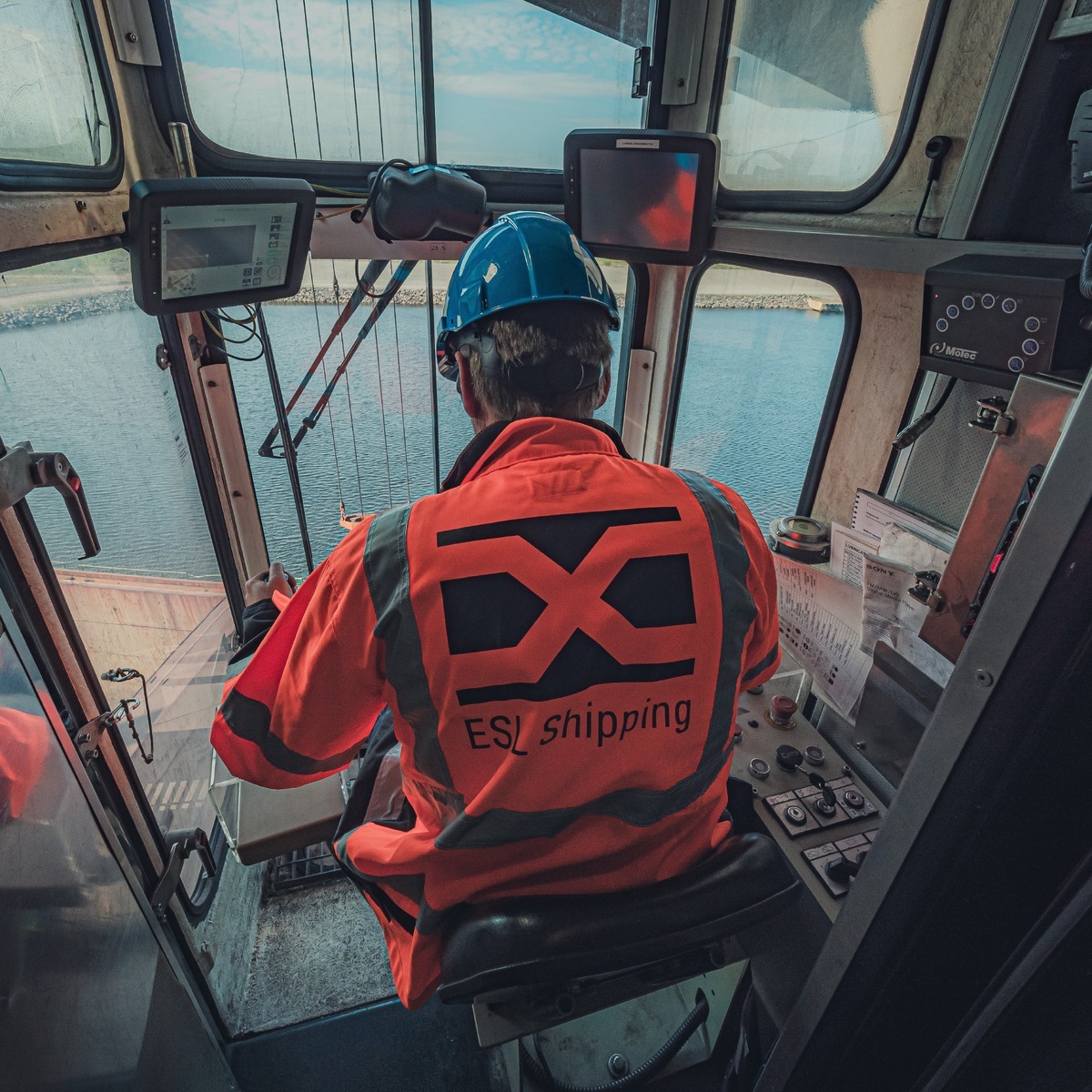
Most of our employees work at sea
In 2025, the number of employees remained in the same level as in 2024. At the end of 2025, the group had 250 (253) employees, of which 72% (76%) worked at sea and 28% (24%) ashore.
The number of shore personnel increased by 18% in 2025, while the number of sea personnel declined by 7% following the sale of Kallio. ESL Shipping’s parent company Aspo restructured its shared IT services in the spring and as a result, eight IT professionals were transferred from Aspo Services to ESL Shipping. The change supports the plan to make ESL Shipping a standalone company with its own IT resources.
Gender distribution remained unchanged from the previous year as 15% (16%) of employees were female and 84% (85%) male. As is typical for the industry, sea personnel is heavily dominated by male employees, which accounted for 93% of seafarers. On the shore personnel, the situation is more balanced with females representing 35% (42%) and male 65% (58%) of the workforce.
The number of seafarers working onboard ESL Shipping AB’s owned and pooled vessels and employed by the external ship management company continued to increase as the number of owned and pooled vessels increased by three in 2025. The number of employees was 121 at the end of the year, corresponding to 19% increase.
Employee wellbeing and health
Employee satisfaction measured by the PeoplePower index remained in AA-level but remained clearly over the general norm. When comparing the sea and shore personnel, numerical results declined slightly in both employee categories. Shore personnel remained in a rating of A+, while the sea personnel declined from AAA to an AA+ rating.
All employees are covered by occupational health care, and the cover is more extensive than required by law. The extensive occupational healthcare services aim to focus on preventative actions. Employees also have access to sports and cultural benefits, which supports the well-being.
The company has a remote work policy, which guides the flexible working arrangements for shore personnel. As employee health and safety remains the responsibility of the employer even during remote work, employees can request stand-up desks, work chairs and extra screens to improve the ergonomics at the home offices. The equipment is purchased by the company and borrowed by employees.
Our mobile intranet solution covers all seafarers working onboard owned and pooled vessels. The mobile intranet enables seafarers to access important information such as company news, announcements and HR information through an easy-to-use mobile interface. The reception from the crew has been overwhelmingly positive.
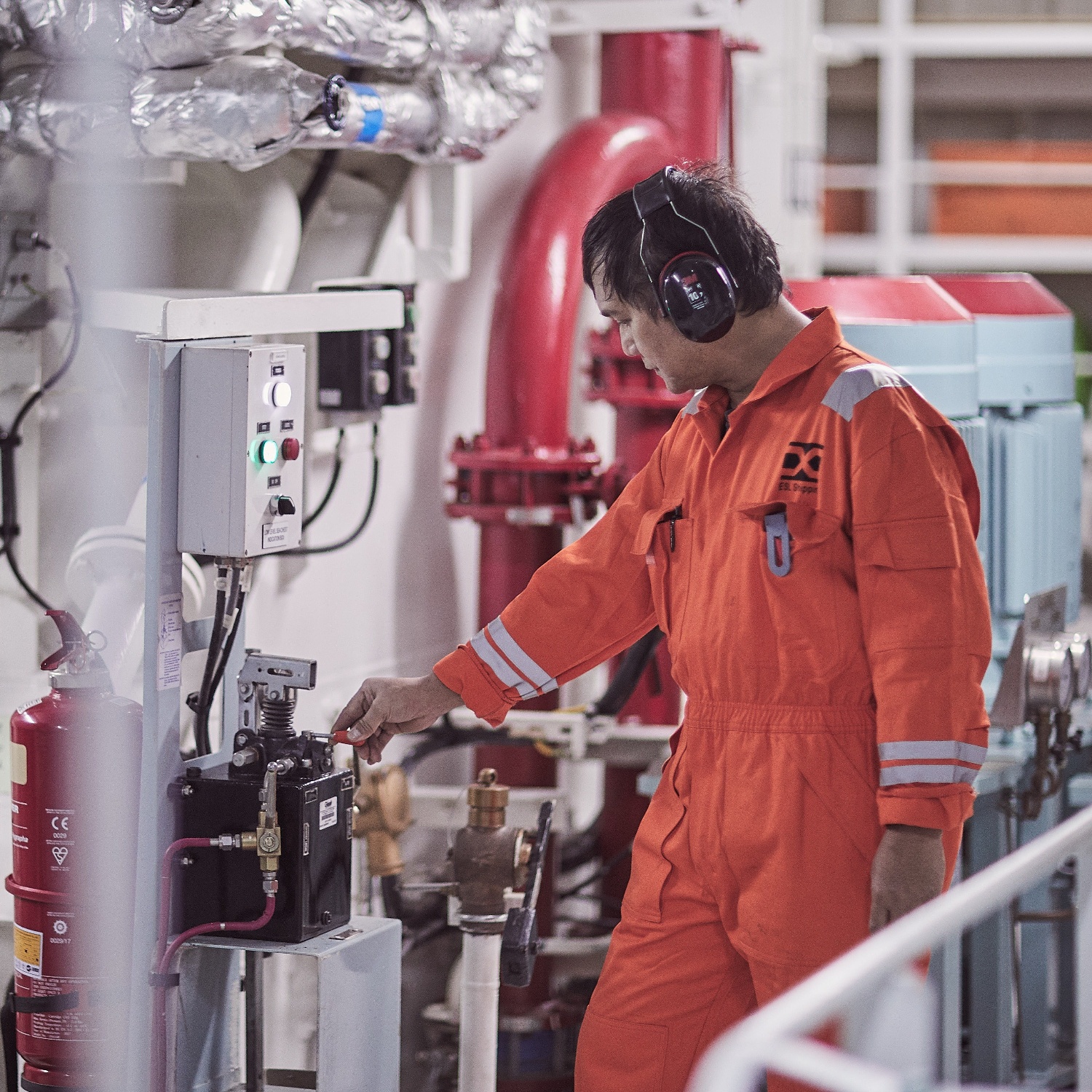


Diversity, Equity and Inclusion
We are committed to respecting internationally accepted human rights as defined in the Universal Declaration of Human Rights and the UN Guiding Principles on Business and Human Rights. Our Code of Conduct defines a common set for rules for the Group’s entire personnel. We reject any discrimination based on education, competence, position, personality, way of life, work experience, ethnic origin, religion, gender, sexual orientation, age, nationality, abilities or other qualities.
The Code of Conduct is further reinforced by Diversity, Equity and Inclusion (DEI) Policy. The purpose of the policy is to communicate to all our stakeholders, including employees, customers, suppliers, shareholders, and the communities we serve, our commitment to promoting and upholding equity, diversity and inclusion throughout all our business activities.
We have a multicultural workforce especially onboard vessels and although the results from employee engagement surveys indicate that there are no significant issues, we want to further increase the understanding of the matter. DEI support and training material is available on the intranet.
Collective bargaining agreements and employee representation onboard
All handysize vessels owned by ESL Shipping are flying the Finnish flag and consequently Finnish legislation and collective bargaining agreements apply to all employees working onboard. ESL Shipping is a member of the Finnish Shipowners’ Association, which negotiates collective bargaining agreements with the trade unions representing seafarers. The unions negotiate collective bargaining agreements for both Finnish and non-EU seafarers. All three unions have appointed employee representatives.
All owned and time-chartered coaster vessels are covered by valid ITF agreements. Our long-term partner GoTa Ship Management is the employer of the seafarers working onboard our owned and pooled vessels.
When taking a vessel into time-charter, we ensure that the working conditions and contracts of employment follow international regulations including remuneration.
Collective bargaining agreements and employee representation ashore
In the Finnish system, collective bargaining agreements are usually negotiated between the employer and employee unions rather than by a company itself. Our parent company Aspo Plc is a member of the Technology Industry Employers of Finland, which negotiates collective bargaining agreements for shore personnel with relevant trade unions.
In Finland, the shore personnel has not formally organised itself or elected a representative as stipulated by the Employment Contracts Act or related collective agreements. Although employee organisation is not compulsory, the company follows the terms of the universally binding collective agreements, specifically those concerning the Technology Industry's salaried and senior salaried employees.
In Sweden, the shore personnel is covered by the national legislation and individual contracts of employment since the company is not subject to any collective or industry-specific agreements imposed by local labour market entities. Nonetheless, we align with legal requirements concerning matters such as primary employment terms and employee representation and organising workplace cooperation. The company has a systematic work environment management plan, which details the plan to maintain and provide a safe working environment for all employees.